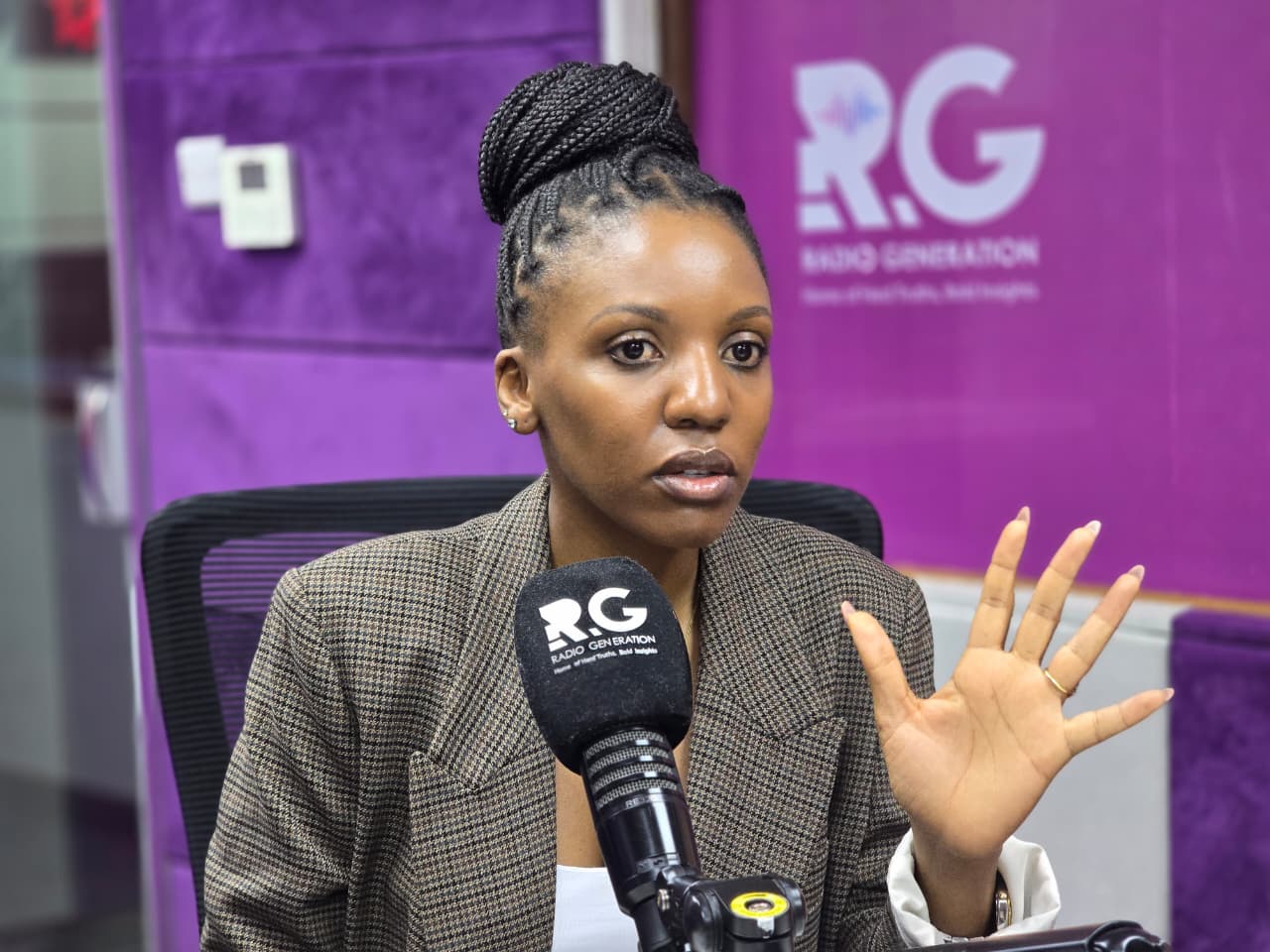
Development economist Sheila Olang has warned that Kenya risks deep political fatigue and instability if leaders fail to address youth, debt, education and health concerns, arguing that slogans and personality politics are alienating a generation demanding solutions.
Speaking during a Radio Generation interview on Tuesday, Olang said having a population where 75 percent are under the age of 35 should be treated as a serious national concern.
“That’s scary, if you think about it,” she said, warning that continued political sloganeering without concrete answers could push the country towards failure. “Nations have failed before. We should not think we are exceptional.”
This debate comes amid Kenya's continued grapple with deep-seated economic and governance challenges that are shaping daily life for millions of citizens, as pressure mounts on the cost of living, employment opportunities, and public trust in leadership.
Unemployment, particularly among young people, remains a persistent concern. Despite a growing, educated workforce, job creation has not kept pace with population growth, pushing many into informal work or prolonged joblessness. This has heightened frustration and social tension across urban and rural areas.
Corruption continues to undermine public confidence, with frequent allegations of misuse of public funds and stalled development projects. Critics argue that weak accountability and political patronage have limited service delivery and widened inequality.
Olang said young people were no longer interested in political symbolism, appearances or personalities, but wanted leaders to address everyday realities.
“I don’t care what you’re clothed in,” she said. “Can you just tell me what we’re going to do about the youth population?
Can you just tell me how we’re going to make sure the health sector is working? Can you just make sure that you appeal to me in terms of how we are going to handle public debt and make sure that our education system is on track?”
Her remarks come amid continued debate within the opposition Orange Democratic Movement (ODM) following the death of its long-time leader, Raila Odinga, and growing public frustration with both government and opposition politics.
The economist acknowledged divisions within ODM, noting that there were different factions within the party, some aligned with the government, others positioning themselves as independent voices.
But she said the fragmentation did not worry her. “For me, this was anyway bound to happen,” she said. “In the absence of Baba, this was about to happen.”
Describing herself as a student of political science, she said few political parties survive beyond their founding leaders.
“I’ve seen very few parties being able to outlive their leadership,” she said, adding that internal cracks can sometimes be part of growth. “Sometimes you need to crack for it to grow.”
What concerned her more, she said, was how long the political uncertainty would last and what it would mean for ordinary citizens.
“How long will this take, and what will it mean for our people, and when will we get it together so that we see how we emerge and get out of this?” she asked.
Reflecting on the 2024 Gen Z-led protests, Olang said the demonstrations represented a rare moment when Kenyans moved beyond party, tribe and personality.
“We were not complaining as ODM or as UDA,” she said. “We were just Kenyans, and we wanted a better system that would work for Kenya.”
She recalled feeling betrayed when Raila Odinga reached an agreement with President William Ruto during a tense political moment, saying she had been so bitter at the time.
But in retrospect, she said, the alternative may have been chaos. “For me, the other option was anarchy. And did we want anarchy?” she asked.
Olang argued that young people must recognise the limits of protest alone. “You cannot change the system without somehow participating in the system,” she said, urging youths to register to vote, contest seats and engage politically beyond the streets.
At the same time, she warned leaders that failure to address bread-and-butter issues would deepen apathy. “My paycheck is under attack,” she said, pointing to new deductions and rising costs. “Now how do I fix that?”
She cited education funding, health services and job security as the issues most likely to mobilise citizens. “Our issues are very basic,” she said. “That is what is going to appeal to the Kenyan population.”
Olang warned that low voter turnout could undermine the legitimacy of elected leaders. “If 15 percent of this population shows up and elects you, and the rest decide to stay at home, that is very risky,” she said.
Ultimately, she said, Kenya’s challenge was not personalities but systems. “I don’t really care who sits there,” Olang said. “I need the job done.”






























